
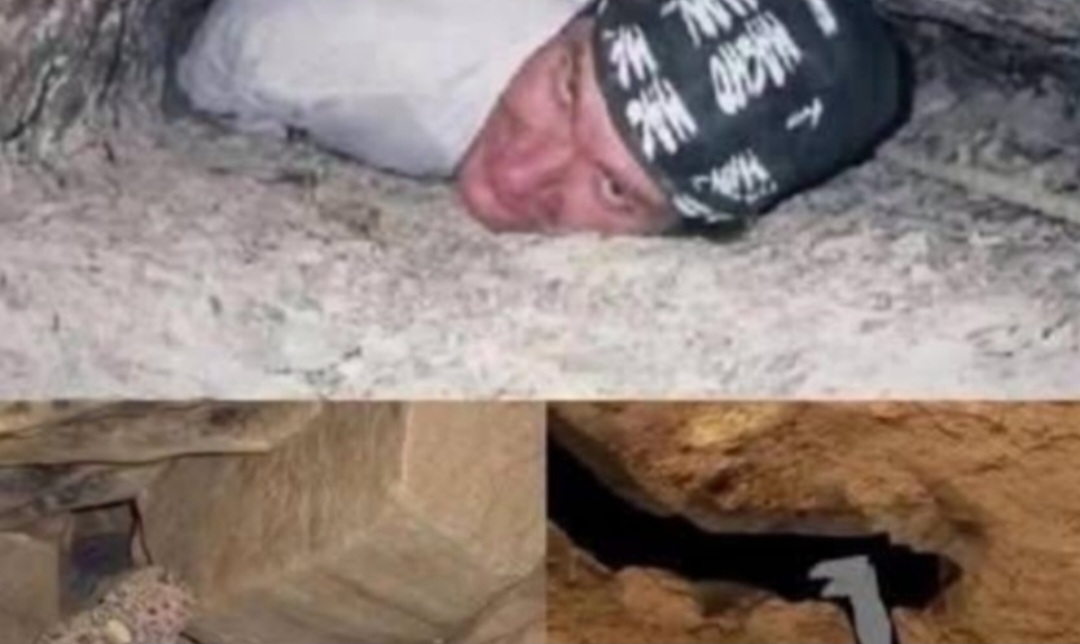
They Found Him Trapped and Rushed to Rescue Him — What Happened Next Was UnforgettableA peaceful Saturday morning in the hills suddenly became an emergency when a hiker spotted something unusual near a steep ravine.At first, Daniel thought he was looking at an abandoned backpack.Then it moved.What he had noticed wasn’t discarded equipment at all. A man was lying on uneven ground near the edge of the ravine, apparently too weak to get himself to safety.Daniel had no idea how the man had ended up there.He only knew that someone needed help.And what happened next became a tense rescue involving unstable terrain, specialized equipment, worsening weather, and a team that understood one important rule: getting there quickly mattered, but getting there safely mattered just as much.It Started as an Ordinary Saturday HikeEvery Saturday morning, Daniel followed the same trail through the hills outside town.He knew the route well.There were tall pine trees near the entrance, a narrow wooden bridge over a shallow stream, and a rocky overlook where the trail climbed high enough to reveal the valley.The walks were part of his weekly routine.During the week, life was filled with deadlines, phone calls, work, and responsibilities. Out on the trail, everything felt slower.There were birds instead of traffic.Leaves moved in the breeze.His footsteps provided the only rhythm he needed.That morning seemed no different.The air was cool, birdsong echoed between the trees, and a light breeze moved through the branches overhead.Nothing suggested that Daniel was about to encounter a situation that would change the entire character of his morning.Then Daniel Noticed Something Near the RavineAs Daniel continued along the trail, something caught his attention near a steep ravine.At first glance, it looked like a backpack.Perhaps someone had left equipment behind.Then the object moved.Daniel stopped.He looked more carefully.It wasn’t a backpack.It was a person.A man was lying on uneven ground near the edge of the ravine.And he appeared to be in trouble.The discovery immediately changed Daniel’s priorities.Instead of rushing down the slope, he recognized that the terrain itself could be dangerous.The man might be injured, and approaching carelessly could potentially put both of them at risk.So Daniel did something simple but important.He called emergency services.He Stayed Nearby Without Attempting a Dangerous RescueDaniel carefully described the location.He explained the trail, nearby landmarks, and the man’s apparent condition.The man appeared conscious but extremely weak.Daniel remained nearby, maintaining a safe position while emergency responders were contacted.He kept speaking calmly so the man would know he wasn’t alone.“Help is coming,” Daniel told him.Help is coming,” Daniel told him.
“You’re not alone.”
The man’s eyes opened briefly.
His voice was barely audible.
He whispered one word:
“Water.”
Daniel understood that the man was extremely thirsty or possibly dehydrated, but he also knew there could be an unseen injury.
Moving someone who may have suffered a serious fall can make an injury worse.
So rather than attempting to improvise a rescue, Daniel continued communicating with emergency responders and stayed with the man from a safe position.
That decision became an important part of what happened next.
The Wait Felt Much Longer Than It Was
The minutes that followed seemed to stretch on.
Daniel listened for approaching rescuers while keeping his attention on the man.
The forest no longer felt like the peaceful place it had been moments earlier.
Every sound seemed louder.
The wind through the trees.
A distant bird.
The movement of Daniel’s own feet against the ground.
He continued talking to the man.
The stranger appeared exhausted and disoriented. His clothing was torn, and he seemed unable to stand without assistance.
Daniel still didn’t know what had happened.
Had the man fallen?
Had he become lost?
Had he been injured somewhere farther along the trail?
There were plenty of questions, but none of them mattered as much as the immediate problem.
The man needed help.
Eventually, the sound of approaching rescue personnel could be heard through the trees.
The Rescuers Quickly Realized This Wasn’t a Simple Evacuation
When the rescue team arrived, they assessed the situation.
The man was close to a steep ravine.
The ground was uneven.
Loose rocks presented another hazard.
Recent rain had softened portions of the soil, making the footing unreliable.
A careless movement could have sent a rescuer sliding toward the same dangerous area.
The team therefore didn’t simply rush toward the injured man.
They evaluated the terrain first.
That may not have looked dramatic from a distance, but it was essential.
A successful rescue requires protecting the person being rescued and the people performing the rescue.
Ropes, Harnesses, and Anchor Points Were Prepared
The rescuers began preparing their equipment.
Ropes were checked.
Harnesses were readied.
Potential anchor points were assessed.
Communication between team members became constant.
Everyone needed to understand what the others were doing.
The terrain demanded careful coordination, and the man’s condition made unnecessary movement even more concerning.
There was no benefit to creating another emergency.
The goal was clear:
Reach the man, secure him, and bring him out safely.
The Rescue Was Built on Patience
From the outside, rescue operations can sometimes look like moments of dramatic action.
But difficult rescues often depend on something much quieter.
Patience.
One rescuer approached the man while others monitored the terrain.
Another focused on securing the equipment.
Others watched the surrounding area for movement in the unstable ground.
Every step was deliberate.
The objective wasn’t simply to reach the man as quickly as possible.
It was to reach him without putting anyone else in danger.
Once the rescuers were close enough, they assessed his condition and prepared him for evacuation.
He was weak, exhausted, and unable to move safely on his own.
The team needed to stabilize the situation before attempting to bring him back toward the trail.
Then the Weather Changed
Just as the rescue began to feel more manageable, the weather took another turn.
Dark clouds moved across the sky.
The wind strengthened.
Then rain began to fall.
At first, it was light.
Within minutes, it became heavier.
That created another complication.
The already-unstable ground became slippery, making movement around the ravine even more difficult.
The team had to pause and reassess.
It may have been frustrating to stop when someone was waiting to be rescued, but rushing forward under worsening conditions could have put everyone at greater risk.
The rescuers checked their equipment again.
They communicated.
They adjusted their positions.
They remained focused.
The rain continued, but there was no room for panic.
Every Rescuer Had an Important Role
One of the most striking parts of a complicated rescue is how much depends on teamwork.
There isn’t necessarily one person doing everything.
Instead, each member has a specific responsibility.
One person may monitor the patient.
Another manages the rope system.
Someone else checks an anchor.
Another watches the surrounding terrain.
Communication connects all of those jobs.
If one person moves without coordination, the entire operation can become more dangerous.
That was particularly important on the hillside.
The injured man was vulnerable.
But the rescuers were also operating in the same unstable environment.
Their safety mattered too.
Why Improvised Rescues Can Be Risky
Daniel’s response offers an important lesson for hikers who encounter someone injured in difficult terrain.
The instinct to help is powerful.
But helping doesn’t always mean physically moving the person yourself.
If someone may have suffered a fall or serious injury, moving them unnecessarily could potentially worsen the situation.
Terrain creates another problem.
A steep slope, unstable rocks, slippery soil, or a hidden drop can turn a well-intentioned attempt into another emergency.
Calling professional responders, providing accurate location information, staying nearby when it is safe, and communicating calmly can be much more useful than attempting a technically difficult rescue without proper equipment or training.
A Peaceful Trail Became the Scene of a Carefully Coordinated Rescue
Earlier that morning, Daniel had been thinking about none of this.
He had expected birdsong, cool air, familiar trees, and a quiet walk through the hills.
Instead, he found a person in distress and became the first link in a rescue effort.
What makes the situation particularly striking is that Daniel wasn’t a professional rescuer.
He was simply someone who noticed that something was wrong.
He stopped.
He looked again.
And he acted.
The rescue team then took over, bringing the specialized knowledge and equipment necessary to deal with dangerous terrain.
The Most Important Lesson Wasn’t Speed
The story might initially sound like a tale about a dramatic rescue.
But underneath the tension is a quieter lesson.
Rescue isn’t always about moving as quickly as possible.
Sometimes the safest action is to stop.
Assess the situation.
Call for help.
Keep the person calm.
Wait for professionals.
Then let trained rescuers determine the safest way forward.
Daniel did not know exactly what had happened to the man, and he didn’t try to solve the mystery before help arrived.
He focused on the one thing he could do.
Keep reading — tap the button below to continue.