
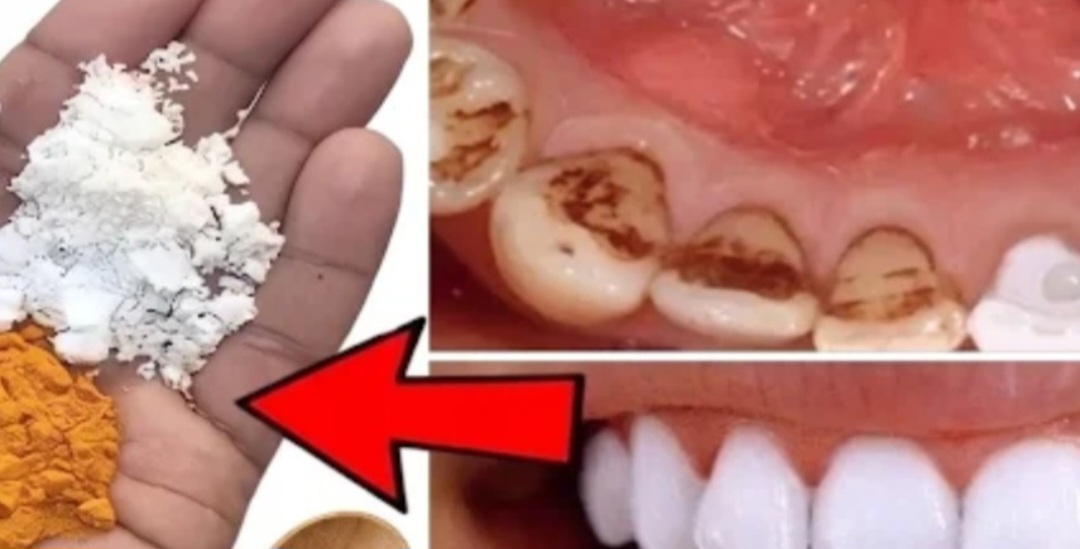
A brighter smile is one of those little things that can make you feel instantly more put together. And if you’ve ever searched for natural teeth-whitening remedies, chances are you’ve come across a rather surprising combination: turmeric and baking soda.At first glance, it sounds almost backwards. Turmeric is famously bright yellow, so why on earth would anyone put it on their teeth?Well, there’s a little more to this viral home remedy than meets the eye!Baking soda has long been used in oral-care products because its mild abrasiveness can help remove certain surface stains. Turmeric contains curcumin, a compound that has been studied for its anti-inflammatory and antimicrobial properties in oral health. But there’s an important distinction here: neither ingredient should be treated as a magic bleaching agent, and there isn’t good evidence that rubbing turmeric on your teeth will dramatically whiten them in two minutes.That doesn’t mean the idea is completely without merit. It simply means we need to separate the interesting science from the internet hype.So let’s talk about what turmeric and baking soda can actually do, how to use a very gentle version of the remedy, what NOT to do, and when professional whitening makes much more sense.And please remember: this is a cosmetic home-care idea, not a replacement for brushing with fluoride toothpaste, flossing, regular dental care, or treatment for dental problems.Can Turmeric and Baking Soda Really Whiten Teeth?They may help teeth look cleaner and slightly brighter by addressing surface buildup and stains, but they do not provide the same type of whitening as peroxide-based bleaching.That distinction is really important.The American Dental Association explains that surface, or extrinsic, stains can come from things such as coffee, tea, red wine, tobacco, and highly pigmented foods. Mechanical cleaning can help remove some of these stains.Intrinsic discoloration is different. That’s discoloration within the tooth itself, including changes involving the enamel or dentin. A homemade paste isn’t going to magically change the underlying color of the tooth.So if your teeth have a little coffee staining, this type of gentle polishing may make them appear fresher.If you’re expecting several shades of dramatic whitening overnight, though?That’s where expectations need to come down a notch.How Does the Turmeric and Baking Soda Remedy Work?Baking Soda: The Surface-Stain HelperBaking soda is sodium bicarbonate, and it is mildly abrasive.That means it can physically help remove some debris and surface staining from the outside of the teeth.In fact, abrasives are commonly used in toothpastes specifically because they help clean teeth and remove extrinsic stains. Whitening toothpastes generally work largely through this mechanical stain-removal action.Baking soda is also alkaline, which is one reason it has long been used in oral-care products.But here’s the catch:More scrubbing does not mean whiter teeth.Using an overly abrasive mixture or brushing aggressively can potentially damage tooth surfaces or irritate the gums. The goal should be gentle cleaning—not sanding your teeth.What About Turmeric?Turmeric contains curcumin, a plant compound that has been studied for its antioxidant, anti-inflammatory, and antimicrobial properties.Research into curcumin and oral health is interesting. Studies have investigated turmeric and curcumin in connection with plaque, gingivitis, and other oral-health applications. However, this research does not establish turmeric powder as a proven tooth-whitening treatment.That’s an important difference.So while turmeric may have interesting oral-health properties, we shouldn’t promise that it chemically bleaches teeth.And yes, the bright yellow color makes this remedy look particularly suspicious!Fortunately, using turmeric doesn’t automatically mean your teeth will permanently turn yellow. But turmeric can stain many surfaces—including fabrics, countertops, and other materials—so thorough rinsing is essential.Why People Try This Natural Whitening MethodThere are a few reasons this DIY remedy keeps popping up online.It’s inexpensiveBaking soda and turmeric are common pantry ingredients, so there’s no need to purchase an expensive whitening kit just to experiment with a gentle surface-cleaning approach.It uses simple ingredientsThere’s something appealing about a remedy that doesn’t require a cabinet full of products.It may help with surface stainsThe baking soda component can provide mild mechanical cleaning, which may help teeth affected by superficial discoloration.It’s easy to makeWe’re talking about a tiny amount of powder mixed with water—not a complicated beauty routine.But remember: simple doesn’t automatically mean safer or more effective.How to Make a Gentle Turmeric and Baking Soda Tooth PasteIf you’re going to try this approach, keep it very mild.Ingredients1/4 teaspoon baking sodaA small pinch of turmeric powderA few drops of waterThat’s it.You don’t need a giant spoonful of either ingredient.And please don’t turn the mixture into a gritty paste and scrub away at your teeth for several minutes. That’s not how this works.Step-by-Step MethodStep 1: Mix the Ingredients
Place the baking soda and tiny pinch of turmeric in a clean dish.
Add just a few drops of water.
Mix until you have a thin, smooth paste.
You want something that spreads easily—not something thick and gritty.
Step 2: Apply Very Gently
Using a soft toothbrush, apply a small amount to the teeth.
Use very light pressure.
Think polishing, not scrubbing.
There is no prize for brushing harder!
Step 3: Keep the Contact Brief
If you’re experimenting with this homemade paste, keep the application brief rather than leaving it sitting on your teeth.
There’s no good evidence that leaving turmeric and baking soda on your teeth for several minutes—or overnight—will produce better whitening.
Step 4: Rinse Thoroughly
Rinse your mouth well with water.
Take your time here, especially because turmeric can leave pigment behind.
Step 5: Return to Your Normal Oral-Care Routine
This is the most important part.
Your everyday oral-care routine should still center around fluoride toothpaste and regular brushing, along with cleaning between the teeth.
A DIY mixture should never replace your normal toothpaste or your dentist’s recommendations.
How Often Should You Use It?
This is where I would be conservative.
There isn’t an established, evidence-based schedule showing that homemade turmeric-and-baking-soda brushing safely whitens teeth when used repeatedly.
Because baking soda is abrasive, more frequent or more aggressive use isn’t automatically better.
If your goal is simply a brighter smile, a fluoride toothpaste designed for stain removal or an evidence-based whitening product is a more predictable option.
The ADA notes that whitening toothpastes can remove extrinsic surface stains, while peroxide-based whitening products can actually bleach tooth color.
What You Should NOT Add to This Remedy
This is where many DIY whitening recipes go off the rails.
You may see recipes recommending lemon juice, vinegar, hydrogen peroxide from the medicine cabinet, salt, charcoal, or other highly abrasive ingredients.
I wouldn’t pile ingredients together just because the internet says they’ll make the teeth whiter.
Skip Lemon Juice and Other Acids
Acidic substances can contribute to enamel erosion.
There’s no reason to turn a mild cleaning experiment into an unnecessarily harsh chemical treatment.
Don’t Add Table Salt for Extra Scrubbing
More abrasiveness isn’t better.
If the goal is stain removal, aggressive scrubbing can work against you.
Don’t Use Household Hydrogen Peroxide Randomly
Peroxide is used in professionally formulated and over-the-counter whitening products, but concentration, formulation, contact time, and application matter.
A bottle of household peroxide isn’t interchangeable with a properly formulated dental whitening product.
Don’t Add Activated Charcoal Just Because It’s Trendy
The ADA notes that evidence for charcoal-based whitening products remains insufficient to establish adequate whitening benefit and safety.
Will Turmeric Make Your Teeth Yellow?
This is probably the question everyone wants answered!
Using turmeric doesn’t mean your teeth will permanently turn yellow.
But turmeric is intensely pigmented, and it can certainly leave residue behind if you don’t rinse thoroughly.
That’s one reason I would use only a tiny amount.
And if you notice yellow residue around the gumline or between the teeth, stop and clean your mouth normally rather than repeatedly applying more paste.
The irony would be pretty funny if a supposed whitening treatment left you looking more yellow!
The Biggest Mistake: Scrubbing Too Hard
This deserves its own section because it’s easy to fall into the trap of thinking:
“If a little helps, more must help more.”
Not with teeth.
Tooth enamel is hard, but that doesn’t mean you should aggressively scrub it with abrasive powders.
The goal of stain removal is to clean the tooth surface—not wear away the surface.
If your toothbrush bristles are flattened after brushing, you’re probably using too much pressure.
A soft-bristled toothbrush and gentle technique are a much better approach.
Who Should Skip DIY Teeth Whitening?
Homemade whitening mixtures aren’t appropriate for everyone.
Talk with a dentist before experimenting if you have:
- Tooth pain
- Significant tooth sensitivity
- Bleeding or swollen gums
- Cavities
- Cracked or damaged teeth
- Gum recession
- Enamel erosion
- Dental restorations you’re concerned about
- Persistent discoloration affecting only one tooth
And if a tooth suddenly changes color—especially if it becomes gray, dark, or noticeably different from the surrounding teeth—that deserves a dental evaluation rather than a whitening experiment.
What About Crowns, Veneers, and Fillings?
Here’s another important detail.
Whitening treatments work on natural tooth structure, not tooth-colored restorations.
The ADA notes that whitening doesn’t whiten tooth-colored restorations.
So if you have veneers, crowns, bonding, or tooth-colored fillings, whitening your natural teeth may make the difference between the natural teeth and restorations more noticeable.
That’s something to discuss with your dentist before whitening.
Turmeric and Oral Health: What Does the Research Actually Say?
This is where the story gets interesting.
Curcumin has been investigated for several oral-health applications because of its biological properties. Recent reviews describe research into its anti-inflammatory and antimicrobial effects and potential uses in conditions involving the gums and oral tissues.
There have also been clinical studies of curcumin-containing mouthwashes for plaque and gingivitis.
However, the evidence isn’t the same thing as proving that rubbing kitchen turmeric powder onto your teeth will whiten them.
A systematic review of curcumin mouthwash studies found promising effects but also noted important limitations in the available research, including study-quality concerns and the need for better trials.
So I’d put turmeric in the “interesting ingredient with promising oral-health research” category—not the “proven natural tooth bleach” category.
What Actually Works Better for Whitening?
If you’re looking for measurable whitening rather than simply cleaner-looking teeth, there are better-studied options.
Whitening Toothpaste
Whitening toothpastes can help remove surface stains through abrasives, and some formulations also contain ingredients that contribute to whitening.
Whitening Strips
Many over-the-counter whitening strips use peroxide to lighten tooth color.
Dentist-Supervised Whitening
Dentists can provide customized whitening approaches and evaluate whether discoloration is caused by surface staining, intrinsic changes, decay, restorations, or another issue.
The ADA identifies peroxide-based carbamide peroxide and hydrogen peroxide as common bleaching agents in professional and over-the-counter whitening treatments.
Natural Ways to Keep Teeth Looking Brighter
Sometimes the best whitening strategy isn’t another homemade paste.
It’s preventing new stains in the first place!
Brush Regularly
Use fluoride toothpaste and a soft toothbrush.
Clean Between Your Teeth
Floss or use another dentist-recommended interdental cleaning method.
Rinse After Staining Drinks
After coffee, tea, or other strongly pigmented drinks, rinsing with water can be a simple way to reduce lingering residue.
Don’t Smoke or Use Tobacco
Tobacco is a major contributor to tooth discoloration and also poses significant oral-health risks.
Keep Regular Dental Appointments
Professional cleanings can remove deposits and stains that home brushing can’t always handle.
Frequently Asked Questions
Does turmeric really whiten teeth?
There isn’t strong evidence that turmeric powder itself bleaches teeth. Curcumin is being studied for several oral-health applications, but its potential antimicrobial and anti-inflammatory properties shouldn’t be confused with proven tooth bleaching.
Can baking soda whiten yellow teeth?
Baking soda may help remove some surface staining, which can make teeth look cleaner and brighter. It does not reliably change the natural internal color of the tooth.
Can I leave the turmeric paste on overnight?
No. There’s no established benefit to leaving a homemade turmeric-and-baking-soda mixture on your teeth overnight, and prolonged exposure isn’t necessary.
Will turmeric permanently stain my teeth?
Turmeric is highly pigmented, so residue can temporarily make things look yellow. Thorough rinsing and normal oral hygiene should remove residue. But don’t assume every discoloration is turmeric—persistent changes should be evaluated by a dentist.
Can I use this instead of toothpaste?
No.
A homemade turmeric-and-baking-soda paste doesn’t replace fluoride toothpaste or a complete oral-hygiene routine.
How quickly will I see results?
If it helps at all, the most realistic result is a cleaner appearance from removal of superficial debris or staining.
Claims that this combination can dramatically whiten teeth in exactly two minutes aren’t supported by strong clinical evidence.
Is professional whitening safer?
Professional and reputable over-the-counter whitening products are formulated and tested for their intended use. A dentist can also check for cavities, gum disease, enamel problems, and other issues before whitening.
Sensitivity and gum irritation can occur with legitimate whitening treatments, which is another reason to follow product directions rather than improvising.
Does baking soda damage enamel?
Baking soda itself is widely used as an abrasive ingredient in oral-care products, but how a substance is used matters. Aggressive brushing, excessive abrasion, or homemade mixtures with additional abrasive ingredients are not something I’d recommend.
Keep reading — tap the button below to continue.