
You Might Also Enjoy
- The Difference Between Pure Maple Syrup and Pancake Syrup
- Why Maple Syrup Is Graded by Color
- How Maple Sap Becomes the Syrup We Pour on Pancakes
- The History of Maple Sugaring in North America
- Why Maple Syrup Tastes Different From One Region to Another
- The Best Breakfast Recipes for Using Real Maple Syrup
And yes, I fully support pouring a little extra syrup while you read.
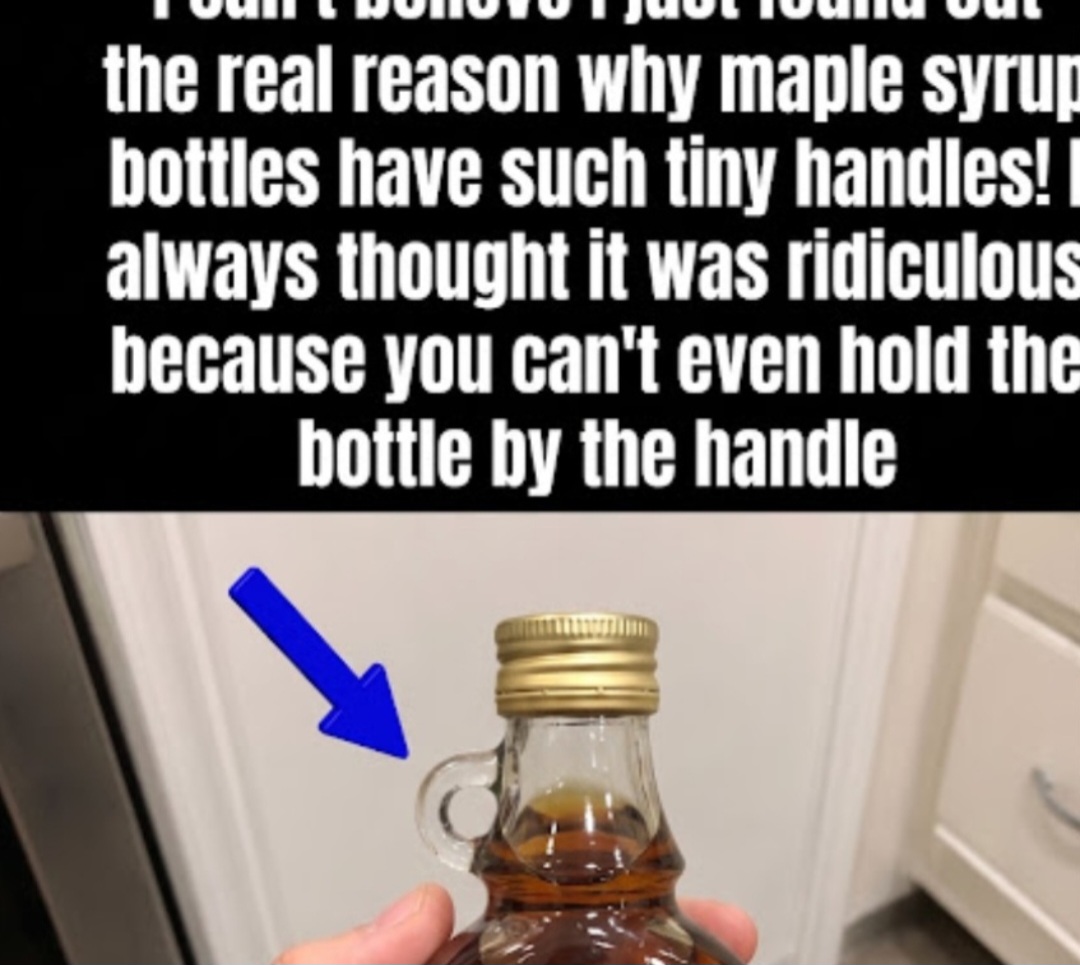
Did You Know This About Your Syrup Bottle?
If this tiny-handle mystery surprised you, I’d love to hear from you!
Did you already know why maple syrup bottles have those little loops, or did you assume they were actually supposed to be used as handles?
Leave a comment and tell me what you thought!
And if you have a beautiful breakfast photo featuring one of those classic little syrup bottles, share it on Pinterest. I’d love to see those pancakes, waffles, French toast, and all that glorious maple syrup!
Sometimes the tiniest kitchen details have the sweetest stories.
A Quick Note on the History
The history of the maple syrup bottle is more complicated than the popular explanation that today’s tiny handle is simply a leftover from old-fashioned syrup jugs.
Historical research shows that similar handled designs were deliberately created and patented in the 20th century, including Edwin W. Fuerst’s 1933 design and Brooks D. Fuerst’s 1951 oval syrup flask. The precise original motivation for including the small handle isn’t documented with certainty, so it’s more accurate to describe its nostalgic and jug-like appearance as an interpretation rather than a proven single-purpose explanation.
And honestly, I think that makes the story even better.
Because after nearly a century, we’re still wondering about it.
That’s a pretty impressive legacy for one tiny handle.