
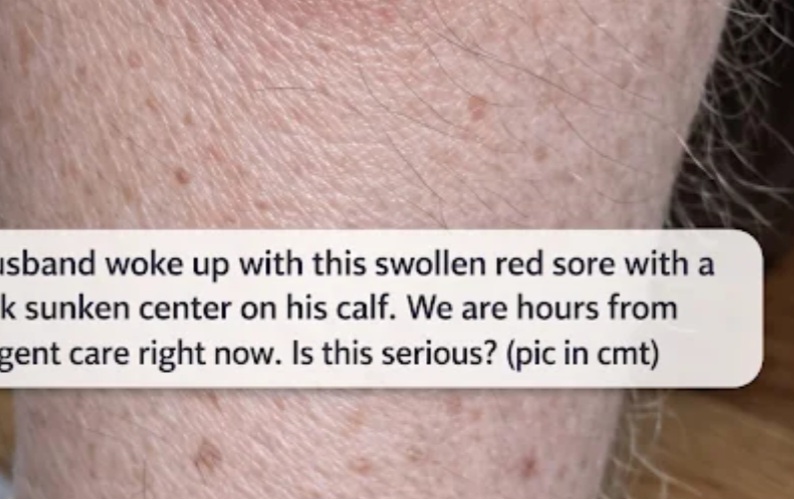
Oh, my dear friend, I know that sinking feeling of standing in the kitchen with a cup of coffee, looking at something on your loved one’s skin, and wondering, “Do we watch this, or do we go now?” When you live hours from urgent care, that question feels even heavier.If your husband woke up with a swollen, red, painful sore on his calf and the middle looks dark, sunken, or blistered, I would treat that as something that needs medical attention soon. A sore with a dark center can mean more than a simple bug bite. It can happen with a serious skin infection, a bite from a brown recluse in some parts of the country, or even a boil or abscess that is starting to damage the skin.Let me walk you through what signs make this more urgent, what you can do in the next 30 to 60 minutes while you’re still at home, what not to do, and when the answer is to head out for care even if the drive is long.Signs That Make This More UrgentSome symptoms suggest the situation is more serious and needs immediate attention. Watch for:Fever or chills: This can indicate a systemic infection.Rapidly spreading redness: If the red area is expanding quickly, it could be a sign of cellulitis.Severe pain: Pain that is disproportionate to the size of the sore.A dark, sunken, or blistered center: This can indicate tissue damage, which may be caused by a spider bite or a serious infection.Pus or drainage: This can be a sign of an abscess or infection.A red streak spreading from the sore: This can indicate an infection moving through the lymphatic system.Feeling unwell, dizzy, or confused: These are signs of a systemic reaction.While you’re still at home, here are some gentle, practical steps:
- Take a Photo: Take a clear photo of the sore with a ruler or coin next to it for scale. This will help you track any changes.
- Mark the Redness: Use a pen to gently outline the edge of the red area on the skin. This helps you see if it’s spreading.
- Keep It Clean: Gently wash the area with mild soap and water.
- Apply a Clean Dressing: Cover the sore loosely with a clean, dry bandage.
- Elevate the Leg: If possible, have him elevate his leg to reduce swelling.
- Monitor for Changes: Check the sore every 30-60 minutes for changes in size, color, or pain.
What NOT to Do
- Do not squeeze or pop it: This can push infection deeper into the skin.
- Do not apply heat: Heat can worsen some infections and spider bites.
- Do not apply ice directly: If you use ice, wrap it in a cloth first.
- Do not try to remove a stinger or any embedded object: If you see something embedded, leave it for a medical professional.
- Do not ignore worsening symptoms: If things are getting worse, it’s time to go.
When to Head Out for Care
Trust your instincts. If you are worried, it is always better to err on the side of caution. If the sore is:
- Rapidly worsening.
- Accompanied by fever, chills, or feeling unwell.
- Spreading quickly.
- Extremely painful.
Then it’s time to make the drive. A long drive is worth it for peace of mind and proper care.
A Gentle Reminder
When you live far from help, it’s easy to second-guess yourself. But a sore with a dark center is not something to wait on. Trust your instincts, take a deep breath, and do what you need to do to keep your loved one safe.