
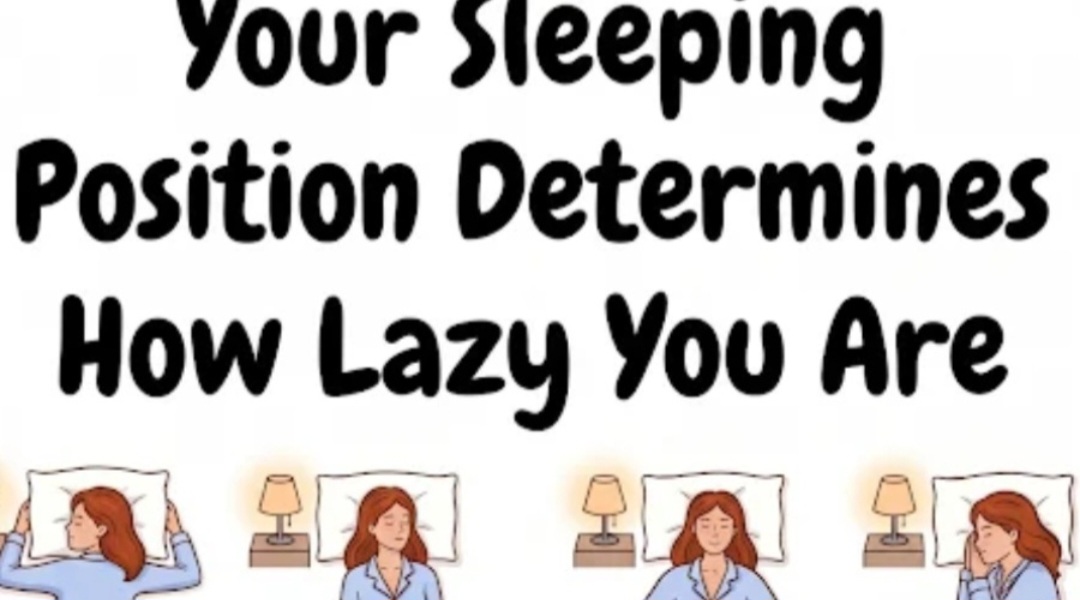
This is one of the most recognizable sleeping positions.
You lie on your side and draw your knees toward your chest, sometimes wrapping your arms around a pillow.
It can feel incredibly cozy.
Especially on a cold night.
The Personality Myth
Popular interpretations often associate the fetal position with people who are sensitive, cautious, or comfort-seeking.
Some versions of the theory even claim that people who curl up tightly are hiding from stress.
It sounds convincing.
But there’s no reliable evidence that your sleeping posture can tell us whether you’re emotionally guarded or sensitive.
Sometimes a person simply finds curling up comfortable!!
A Comfort Consideration
If you sleep curled tightly, try not to pull your knees all the way toward your chest for the entire night if it leaves your back feeling stiff.
A pillow between the knees may provide additional comfort and help support a more neutral hip and spine position.
3. Do You Sleep on Your Back?
Back sleepers lie face-up with the head supported by a pillow and the arms either beside the body, across the stomach, or above the head.
What the Personality Theories Claim
Back sleepers are sometimes described as confident, independent, organized, or comfortable being the center of attention.
It’s a fun idea.
But there’s no scientific personality test hiding underneath your pillow.
Someone can be outgoing and sleep on their side.
Someone can be shy and sleep on their back.
And someone can change positions five times before breakfast!!
What About Physical Comfort?
Back sleeping can feel comfortable for some people because it allows the body to rest in a relatively symmetrical position.
However, sleeping flat on the back can worsen snoring or symptoms of obstructive sleep apnea in some people.
If you regularly snore loudly, wake gasping or choking, experience witnessed pauses in breathing, or feel excessively sleepy during the day, it’s worth discussing those symptoms with a healthcare professional.
4. Do You Sleep on Your Stomach?
Stomach sleeping means lying face-down, usually with the head turned to one side.
Some people absolutely love it.
Others can’t imagine sleeping that way for even five minutes!!
The Personality Myth
Popular sleep-position articles sometimes describe stomach sleepers as bold, stubborn, impulsive, or outgoing.
But once again, those labels aren’t scientifically reliable.
Your favorite position isn’t a personality test.
The Neck Issue
There is a practical reason some stomach sleepers wake up feeling stiff.
Because your head usually has to turn to one side so you can breathe, your neck may remain rotated for a long period.
If you regularly wake with neck or back discomfort, experimenting with a different position or pillow arrangement may help.
5. Do You Sleep Like a Starfish?
This one is easy to recognize.
You’re lying on your back with your arms and legs spread out.
And somehow, by morning, you’ve claimed approximately 97% of the mattress!!
What the Personality Folklore Says
The starfish position is sometimes associated with people who are relaxed, open, generous, or comfortable letting others take the lead.
Again, it’s entertaining to read about—but it isn’t a scientifically validated personality profile.
Your body may simply enjoy having plenty of room.
One Thing to Notice
If sleeping flat on your back causes snoring or breathing problems, your sleep position may be worth discussing with a healthcare professional.
6. Do You Sleep Like a Soldier?
In this position, you sleep on your back with your arms resting close to your sides.
It’s neat.
Straightforward.
Almost suspiciously organized.
The Personality Theory
Popular interpretations describe “soldier” sleepers as quiet, disciplined, reserved, or serious.
But there’s no good evidence that sleeping with your arms at your sides means you’re more disciplined than someone who sleeps diagonally across the bed.
Your sleeping position tells us much more reliably about what feels comfortable than who you are as a person.
7. Do You Sleep With Your Arms Under Your Pillow?
This is less a traditional “named” sleep position and more of a familiar habit.
You may slide one or both arms beneath your pillow because it feels supportive.
It can also simply become part of your bedtime routine.
Something to Watch For
If your arm frequently goes numb, tingles, or feels painful when you wake up, your position could be putting pressure on nerves or blood vessels.
Try changing your pillow height or moving your arm.
If numbness, weakness, or pain persists, talk with a healthcare professional.
8. Do You Hug a Pillow While You Sleep?
Some people won’t sleep without one.
A long body pillow can feel especially comfortable for side sleepers because it gives the arms and legs something to rest against.
And let’s be honest—it can make bedtime feel incredibly cozy!!
What Does It Say About You?
Probably that you like being comfortable.
That’s about as far as science allows us to go.
You may see personality claims suggesting pillow huggers are affectionate, nurturing, or emotionally sensitive.
Those claims are fun, but they’re not established psychological facts.
A Practical Benefit
For side sleepers, placing a pillow between the knees can provide additional support and may make the hips and lower back feel more comfortable.
9. Do You Change Positions All Night?
If you wake up in a completely different position from where you started, don’t worry.
That’s normal.
People naturally move during sleep.
You might begin on your left side, roll onto your back, move to the other side, and eventually wake up somewhere that makes you wonder how you got there.
Your sleep position isn’t necessarily fixed.
And that’s another reason personality claims based on one sleeping posture are difficult to take seriously.
What Your Sleeping Position May Actually Tell You
While your sleeping position can’t reliably reveal whether you’re confident, shy, stubborn, or adventurous, it can sometimes provide clues about physical comfort and sleep quality.
Pay attention to things like:
- Whether you wake with neck pain
- Whether your shoulders feel sore
- Whether your lower back feels stiff
- Whether you snore
- Whether you wake with a dry mouth
- Whether you frequently wake up gasping
- Whether your arms or legs become numb
- Whether you feel rested in the morning
Those observations are much more useful than trying to assign yourself a personality type.
Does Sleeping Position Affect Sleep Quality?
It can.
Comfort is an important part of good sleep, and an uncomfortable position can contribute to aches and repeated awakenings.
Your pillow and mattress also matter.
A pillow that is too high or too low can leave your neck in an awkward position, particularly when you’re sleeping on your side.
Similarly, a mattress that doesn’t provide the support you need may leave you tossing and turning.
So if you’ve suddenly started sleeping differently, don’t immediately assume your personality has changed.
Maybe your mattress has!!
Which Sleeping Position Is Best?
There isn’t one universally perfect sleeping position for every person.
The best position is often the one that allows you to sleep comfortably without causing pain or worsening a medical problem.
Side Sleeping
Often comfortable for many people and may be preferable for those who experience snoring or certain breathing problems.
Back Sleeping
Can feel comfortable and well-supported for some people, but may worsen snoring or obstructive sleep apnea symptoms.
Stomach Sleeping
Some people find it comfortable, although turning the head to the side can contribute to neck discomfort.
Ultimately, comfort, individual health needs, and sleep quality matter more than personality labels.
What If Your Sleeping Position Suddenly Changes?
A change in sleep position isn’t necessarily a problem.
You may simply be more comfortable in a different posture.
However, if you’re changing positions because of persistent pain, difficulty breathing, reflux, pregnancy-related discomfort, or another new symptom, pay attention to the reason behind the change.
Sometimes your body is simply looking for a position that feels better.
And sometimes a new sleep problem deserves a conversation with a healthcare professional.
Frequently Asked Questions
Can your sleeping position reveal your personality?
Not reliably.
There are many popular theories connecting sleeping positions with personality traits, but these aren’t established as reliable psychological assessments.
What is the most common sleeping position?
Side sleeping is commonly reported among adults, although preferences vary and people frequently change positions during the night.
Is sleeping on your side healthy?
For many people, yes.
Side sleeping can be comfortable and may help some people with snoring or certain breathing problems.
Is sleeping on your stomach bad?
Not necessarily.
If it’s comfortable and you wake feeling well, it may simply be your preferred position. However, stomach sleeping can place the neck in a rotated position and may contribute to discomfort in some people.
Is sleeping on your back better?
Not automatically.
Back sleeping works well for some people, but it can worsen snoring or obstructive sleep apnea symptoms in others.
Why do I always sleep in the fetal position?
It may simply be comfortable and familiar.
The idea that the fetal position reveals a specific personality type is largely based on popular sleep-position folklore rather than strong scientific evidence.
Why do I move so much while sleeping?
Changing positions during sleep is normal.
Your body naturally adjusts throughout the night in response to comfort and other factors.
What if I wake up with numb arms?
Try changing your sleeping position and pillow arrangement.
If numbness, weakness, or pain is persistent or repeatedly occurs, discuss it with a healthcare professional.
Can sleeping position cause neck pain?
It can contribute to discomfort, particularly if your neck remains in an awkward position for long periods.
Your pillow height and sleeping posture are both worth considering.
So… What Does Your Sleeping Position Really Say About You?
Maybe not as much about your personality as those viral quizzes would have you believe.
And that’s okay!!
Your sleeping position is influenced by a fascinating combination of comfort, habit, body mechanics, environment, and individual circumstances.
So if you sleep like a starfish, you’re not necessarily outgoing.
If you curl into a tiny ball, you’re not automatically shy.
If you sleep flat on your back, that doesn’t prove you’re confident.
And if you somehow take up the entire bed…
Well, we may need to have a separate conversation with your partner!!
The real lesson is much more useful: pay attention to how your body feels when you sleep.
If you’re comfortable, sleeping well, and waking refreshed, you’ve probably found a position that works for you.
But if your sleeping position is constantly changing because you’re uncomfortable, waking with pain, or struggling to breathe, that’s information worth paying attention to.
The Bottom Line
Sleeping positions make a wonderful conversation starter.
They’re fun to compare with your partner, your family, and your friends, and there’s something oddly fascinating about discovering that someone who looks perfectly composed during the day sleeps like a tangled pretzel at night!!
But don’t let a personality chart convince you that your sleeping position defines who you are.
It doesn’t.
What it can do is give you clues about your comfort and, sometimes, your sleep habits.
So tonight, take a look at where you naturally settle.
Are you a fetal sleeper?
A starfish?
A soldier?
A stomach sleeper?
Or are you one of those people who seems to rotate through every possible position before morning?
Whatever your answer, sleep well.
And maybe don’t judge yourself too harshly if you wake up sideways across the bed.
Apparently, your pillow has been trying to tell you something!!
Did You Find Your Sleeping Position?
Now I’m curious!!
Which position do you naturally fall asleep in?
Fetal, side, back, stomach, soldier, starfish—or something completely different?
Leave a comment and tell me your favorite sleeping position.
And if this article made you look at your bedtime habits a little differently, share it on Pinterest so your friends can take the challenge too.
Because sometimes the simplest everyday habits are the most fun to talk about.
More Interesting Wellness Articles to Explore
- Why Do We Wake Up at the Same Time Every Night?
- What Your Sleeping Habits May Be Telling You
- Why You Sometimes Wake Up Before Your Alarm
- Simple Habits That Can Improve Your Sleep
- Why Do We Dream?
- What Happens to Your Body While You Sleep?