
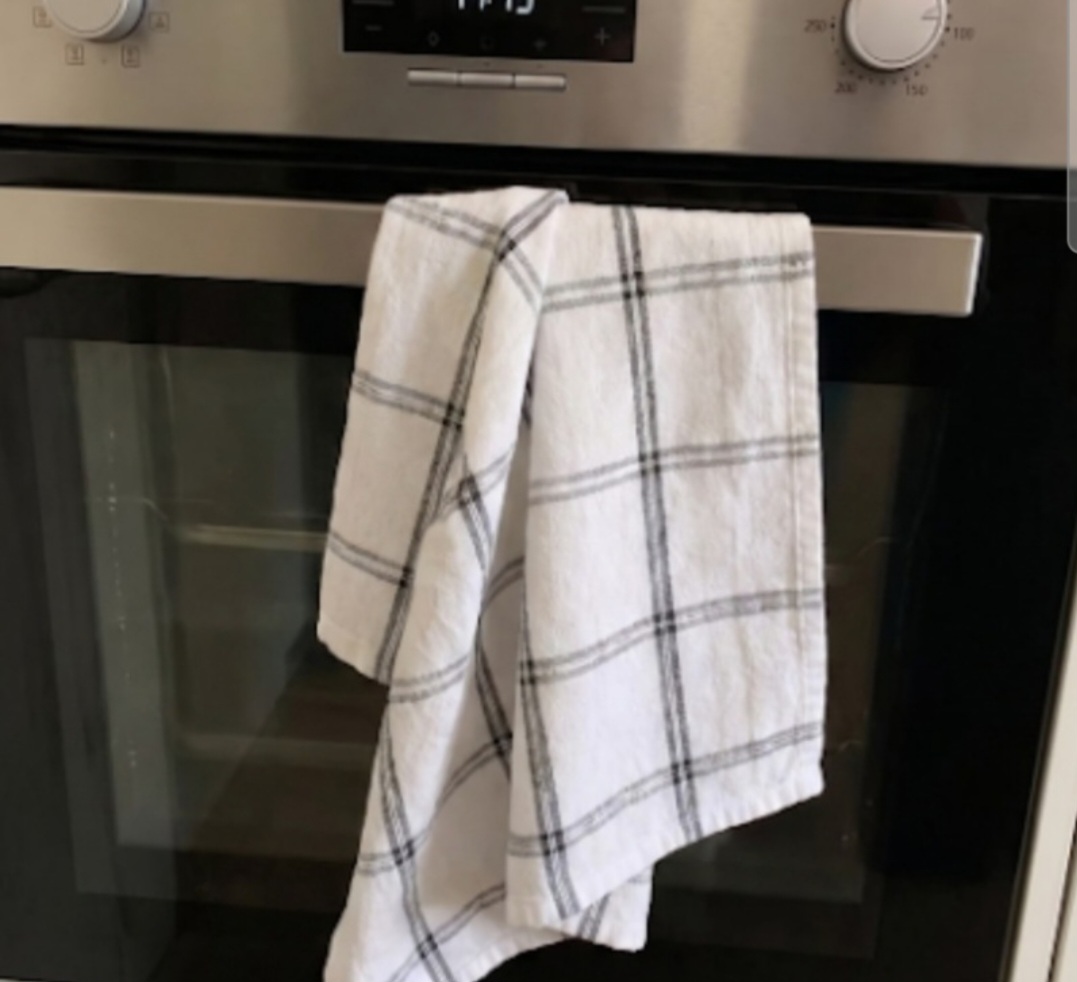
A Simple, Common Habit That Could Put Your Home at RiskOh, my dear friend, it seems like the most harmless kitchen habit in the world. You finish cooking, wipe your hands, and drape a tea towel over the oven door. Maybe you leave it there because it’s convenient. Maybe you use the towel to grab a warm baking dish later. Or perhaps it has simply become part of the kitchen scenery.But that innocent-looking towel can create a surprising fire and burn hazard.While hanging a dish towel on an oven handle isn’t automatically dangerous in every situation, placing fabric too close to heat, flames, or a hot appliance can increase the risk of scorching, catching fire, or causing someone to get burned. And there are a few other reasons this common habit deserves more attention.Why Do People Hang Towels on the Oven Door?The oven handle is practically designed to look like a convenient towel rack. It’s easy to reach, usually at a comfortable height, and often sits right where you need a towel while cooking. If you’re constantly washing your hands, wiping countertops, or handling ingredients, having a towel nearby feels perfectly logical.The problem is that an oven isn’t just another kitchen cabinet. Depending on the oven design, the handle and surrounding surfaces can become quite warm during cooking. A towel hanging directly against the appliance can remain exposed to heat for an extended period.The Risks You Should Know About1. Fire Hazard
Ovens—especially during preheating or while roasting at high temperatures—radiate significant heat through the door and handle. A cotton or linen towel left in contact with a hot surface can easily reach its ignition point. Even if the oven isn’t on, the residual heat from baking or broiling can be enough to scorch or ignite a fabric.
And here’s the scarier part: by the time you notice smoke or flames, the fire may already have spread to nearby paper towels, wooden utensils, or even your countertop.
2. Blocked Ventilation
Most ovens have a vent near the door or along the back. When you cover or trap that airflow with a towel, you’re interfering with the oven’s ability to regulate temperature. This can cause it to overheat, perform unevenly, or—in worst-case scenarios—damage internal components.
3. Oil and Grease Buildup
Tea towels often absorb more than just water. Over time, they collect cooking oils, grease splatters, and food residue. When exposed to high heat, these combustible residues can ignite far more easily than a clean, dry cloth. That “clean” towel you just hung up might be more flammable than you think.
4. Accidental Tugs and Burns
If you have kids, pets, or even just a busy countertop, that dangling towel is an accident waiting to happen. A toddler reaches up and yanks it—along with whatever heavy pan you’re holding. Or you reach for it while wearing oven mitts, and it slips, causing you to touch the hot oven surface directly. The risk of burns or spills increases dramatically.
Safer Ways to Keep Your Towel Handy
You don’t need to sacrifice convenience to stay safe. Here are simple, practical alternatives that keep your kitchen workflow smooth—without the hidden risk.
1. Use a Towel Ring or Hook on a Cabinet
Install a small adhesive or screw-mounted hook on a nearby cabinet or wall. It keeps your towel within arm’s reach but away from direct heat. Plus, it helps the towel dry faster, reducing bacteria growth.
2. Designate a Clean, Dry Spot on the Counter
Fold your towel and place it on a heat-safe trivet or clean section of counter far from the stove. This keeps it accessible but out of the danger zone.
3. Invest in an Over-the-Sink Towel Bar
If your kitchen layout allows, a towel bar mounted above or beside the sink is a game-changer. It keeps towels off the stove, promotes airflow, and looks tidy.
4. Use a Magnetic Towel Holder
These attach to your refrigerator or range hood and hold towels securely without blocking oven vents or handles.
5. Have a Separate Towel for Pot-Handling
Keep a designated, dry oven mitt or pot holder in a drawer or on a hook—and use it only for gripping hot items. Don’t confuse it with your dish-drying or cleanup towels.
6. Change Towels Frequently
If a towel becomes damp or greasy, swap it out immediately. Clean, dry towels are not only safer but also more hygienic for food preparation.
A Gentle Reminder
It’s easy to brush off something as small as a tea towel on the oven handle. But the truth is, many kitchen fires start exactly this way—with a simple oversight we’ve all made. The good news? Adjusting this habit is one of the easiest safety changes you can make. It costs nothing, takes seconds, and gives you peace of mind every time you cook.