
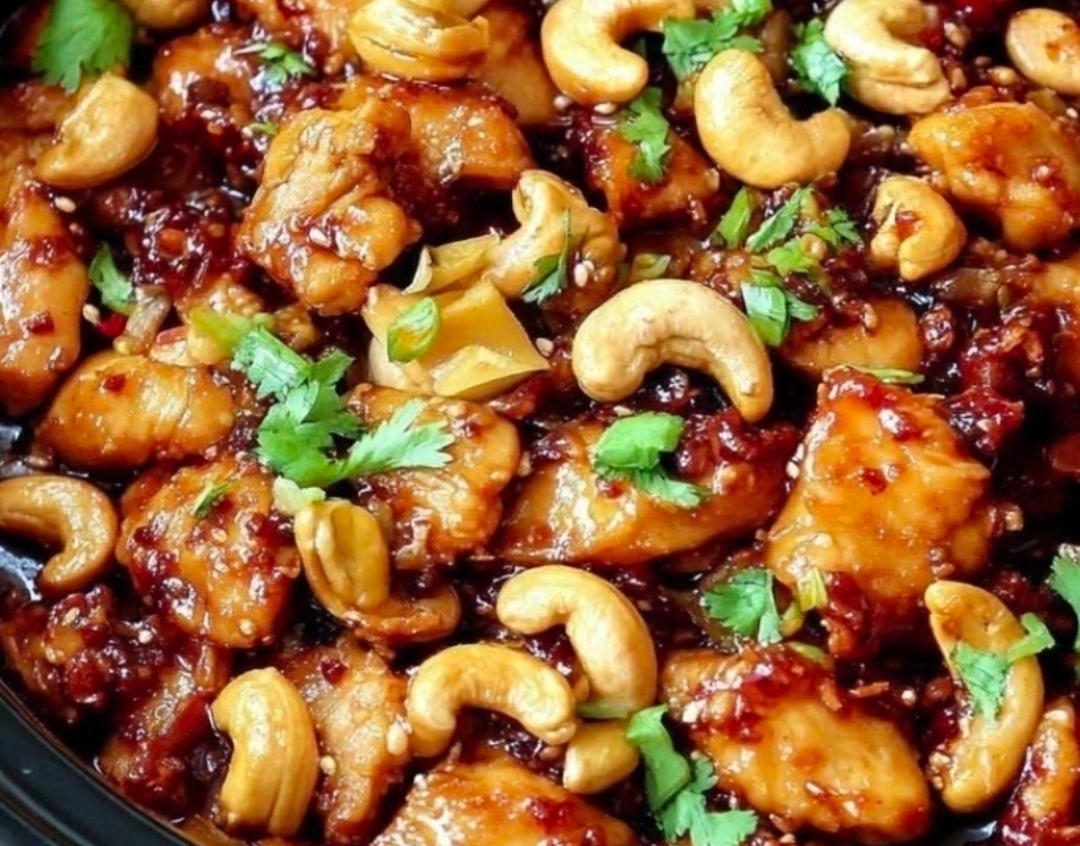
Slow Cooker Cashew Chicken
Cashew chicken sits at the top of most takeout orders for a very good reason: the combination of tender chicken, a savory-sweet soy and hoisin sauce, crisp vegetables, and buttery roasted cashews hits every note you want from a satisfying meal. The problem with ordering it regularly is cost, wait time, and the nagging awareness that restaurant versions are often heavier on sodium and oil than they need to be. This slow cooker version solves all of that. You get the same rich, deeply flavored result — juicy chicken saturated with sauce, crunchy cashews, colorful vegetables — with almost no active cooking time and full control over every ingredient that goes in.
The slow cooker is particularly well-suited to this dish. The long, gentle heat breaks down the chicken to a point of tenderness that’s difficult to achieve on a stovetop without overcooking the exterior, and the sauce concentrates and deepens over the hours in a way that makes it cling to every piece of chicken rather than sitting thin and watery in the pot. Come home to it after a full day and dinner is already done — just add the cashews and vegetables at the end, serve over rice, and you have a meal that genuinely competes with anything you’d order from a restaurant.
Why the Slow Cooker Works So Well Here
The biggest advantage of the slow cooker method for cashew chicken is what it does to the sauce. A sauce built from soy, hoisin, rice vinegar, garlic, and ginger tastes sharp and bright at the start of cooking. After 3 to 4 hours at a low, steady temperature, those sharp edges soften and the flavors meld into something more cohesive and rounded — the garlic becomes sweeter and more mellow, the hoisin deepens, the sweetness from the brown sugar or honey integrates fully rather than sitting on top. The chicken absorbs all of this as it cooks, resulting in pieces that are flavored all the way through rather than just coated on the surface.
The hands-off nature is the other major advantage. There’s no standing at the wok, managing high heat, timing multiple elements simultaneously. You make the sauce, add the chicken, set the cooker, and walk away. The most active part of the process is adding the vegetables and cashews in the final 30 minutes — which takes about two minutes to do.
Ingredient Notes
Chicken — Thighs are the preferred cut for slow cooker dishes. They have more fat and connective tissue than breasts, which means they stay moist and tender through long cooking rather than drying out. The fat also contributes richness to the sauce as it renders during cooking. Boneless, skinless thighs are the most convenient. Chicken breasts can be used for a leaner result, but they need careful attention to cooking time — breasts become dry and stringy if overcooked in the slow cooker, so check them at the lower end of the cooking window. Cut whichever you use into uniform bite-sized pieces, around 1 to 1.5 inches, for even cooking.
Cornstarch coating — Tossing the chicken pieces in a light coating of cornstarch before searing or adding them to the slow cooker is optional but worth doing. The cornstarch creates a very thin coating that helps the chicken hold its shape through the long cook, contributes to the sauce thickening around the chicken, and adds a slightly more substantial texture to each piece. If you sear the coated chicken in a hot skillet before adding it to the slow cooker, you also develop color and flavor through the Maillard reaction that the slow cooker alone cannot create.
Soy sauce is the backbone of the sauce — it provides saltiness and a deep umami quality that anchors everything else. Regular soy sauce produces a robust result; low-sodium soy sauce gives you more control and is recommended if you’re sensitive to salt. For a gluten-free version, tamari or coconut aminos substitute directly with minimal flavor difference.
Hoisin sauce adds sweetness, depth, and a slightly complex fermented quality that’s distinct from anything else. It’s an important component of what makes this taste specifically like cashew chicken rather than a generic Asian-style sauce. Most grocery stores carry it in the international foods aisle; it keeps well in the refrigerator for months after opening.
Rice vinegar provides the slight acidity that balances the richness of the soy and hoisin. It’s mild enough not to make the sauce taste sour, but its presence prevents the sauce from feeling flat or one-dimensional. Apple cider vinegar can substitute in a pinch, but rice vinegar is the cleaner, more appropriate choice.
Brown sugar or honey rounds out the sauce with sweetness and helps balance the saltiness of the soy. Brown sugar produces a slightly more molasses-forward, caramel-like sweetness; honey adds a floral note and thins the sauce slightly more. Either works — use whichever you have or prefer.
Garlic and ginger are non-negotiable aromatics in this sauce. Fresh garlic and freshly grated ginger both deliver a cleaner, more vibrant flavor than their powdered equivalents. The slow cooker mellows their sharpness over time, so start with a generous amount — the flavor will become rounder and more subtle rather than overpowering in the finished dish.
Roasted, unsalted cashews are added at the very end, just before serving. This is important. Cashews added early will absorb liquid, become soft, and lose the textural contrast that makes them so valuable in this dish. Adding them in the final few minutes preserves their crunch and nutty flavor. Roasted cashews have more developed, toasty flavor than raw — if you can only find raw cashews, toast them in a dry skillet for a few minutes first.
Vegetables — Bell peppers, broccoli, snap peas, and snow peas are all excellent choices. Add them in the final 30 minutes of cooking so they soften slightly but retain enough structure and color to be worth eating. If you add them at the start, they’ll be overcooked and grey by the time the chicken is done.
Ingredients
For the Chicken
1.5 lbs (680g) boneless, skinless chicken thighs (or breasts), cut into 1-inch pieces
3 tbsp cornstarch
1 tbsp neutral oil (for searing, optional)
For the Sauce
⅓ cup low-sodium soy sauce
3 tbsp hoisin sauce
2 tbsp rice vinegar
2 tbsp brown sugar or honey
3 cloves garlic, minced
1 tsp fresh ginger, grated
1 tbsp cornstarch mixed with 2 tbsp cold water (slurry, for thickening)
To Finish
1 cup roasted, unsalted cashews
1 red bell pepper, diced
1 cup broccoli florets (or snap peas, snow peas)
2 green onions, thinly sliced (for garnish)
1 tsp sesame seeds (for garnish)
For Serving
Steamed jasmine rice or cauliflower rice
Step-by-Step Instructions
Step 1 — Coat and Sear the Chicken (Optional but Recommended)
Toss the chicken pieces in the cornstarch until each piece is lightly coated. Heat the oil in a skillet over medium-high heat until shimmering. Working in batches to avoid crowding the pan, sear the chicken pieces for 2 to 3 minutes per side until lightly golden on the surface. Don’t cook them through — you’re only developing color and setting the cornstarch coating. Transfer the seared chicken to the slow cooker insert. If you’re skipping this step, add the cornstarch-coated chicken directly to the slow cooker without searing.
Step 2 — Make the Sauce
In a small bowl or measuring cup, whisk together the soy sauce, hoisin sauce, rice vinegar, brown sugar or honey, minced garlic, and grated ginger until fully combined. Taste the sauce before adding it to the slow cooker — this is the easiest point to adjust the balance. More soy sauce increases saltiness and depth; more hoisin adds sweetness and body; more rice vinegar adds brightness; more honey or brown sugar pushes the sweet-savory balance toward sweet. Adjust to suit your preference, then pour the sauce over the chicken in the slow cooker and stir to coat everything evenly.
Step 3 — Cook
Place the lid on the slow cooker. Cook on low for 3 to 4 hours, or on high for 1.5 to 2 hours. The chicken is done when it’s cooked through and tender — it should pull apart easily with a fork. Avoid overcooking, particularly if using chicken breasts, which can become dry and stringy past the point of doneness. Check at the lower end of the time range.
Step 4 — Thicken the Sauce and Add Vegetables
About 30 minutes before the end of the cooking time, stir the cornstarch slurry (1 tablespoon cornstarch mixed with 2 tablespoons cold water) into the slow cooker. This thickens the sauce from thin and brothy to glossy and coating. Add the diced bell pepper and broccoli florets at the same time. Replace the lid and cook for the remaining 30 minutes until the vegetables are just tender and the sauce has thickened around the chicken.
Step 5 — Add Cashews and Serve
Just before serving, stir in the roasted cashews. Taste the dish one more time and adjust seasoning if needed — a small splash more soy sauce, a pinch more sugar, or a drizzle of sesame oil can make a noticeable difference at this stage. Serve immediately over steamed jasmine rice or cauliflower rice, garnished with sliced green onions and a sprinkle of sesame seeds.
Tips for the Best Results
Add the cashews at the very end. This is the most important single tip for this recipe. Cashews added at the beginning or even in the middle of the slow cooker session will absorb liquid and turn completely soft — the crunch that defines cashew chicken disappears entirely. Stir them in immediately before serving to preserve everything that makes them worth including.
Use the cornstarch slurry. Without it, the sauce in the finished dish tends to be thin and watery rather than glossy and coating. Adding the slurry in the final 30 minutes thickens everything to the right consistency. If the sauce is still thinner than you’d like after the cooking time is up, you can transfer the liquid to a small saucepan and reduce it briefly over high heat before returning it to the slow cooker.
Don’t lift the lid repeatedly during cooking. Every time the lid comes off, heat escapes and adds meaningful time to the cooking process. Trust the process and leave it alone.
Taste and adjust the sauce before cooking. Everyone’s palate and everyone’s brand of soy sauce and hoisin is slightly different. Tasting the raw sauce and adjusting before it goes into the slow cooker takes 30 seconds and makes a significant difference to the finished dish.
Add vegetables in the final 30 minutes only. This applies to essentially every vegetable you might add. Anything put in at the start of a 3 to 4 hour cook will be soft, colorless, and texturally uninteresting by the time the chicken is done. The final 30 minutes gives vegetables enough time to cook through while retaining color and some structure.
Frequently Asked Questions
Can I use chicken breasts instead of thighs?
Yes, but monitor the cooking time carefully. Chicken breasts are leaner and have less fat and connective tissue to protect them from drying out over a long cook. Check them at the 2.5 to 3 hour mark on low — they may be done before the full time is up. Thighs are more forgiving and generally produce a juicier, more flavorful result in the slow cooker.
Is the searing step really necessary?
It’s optional, not required. The dish will taste good without searing. However, searing the cornstarch-coated chicken creates color and develops flavor through caramelization that the slow cooker cannot replicate, and the cornstarch coating sets more cleanly, helping the chicken hold its shape. If you have the time and an extra pan, it’s worth doing. If you’re in a hurry, skip it and the result will still be very good.
Can I make this gluten-free?
Yes. Substitute tamari or coconut aminos for the soy sauce, and check that your hoisin sauce is labeled gluten-free — most mainstream hoisin sauces contain wheat, but gluten-free versions are widely available. Cornstarch is naturally gluten-free, so no substitution is needed there.
How do I make this spicier?
Add a teaspoon of Sriracha or sambal oelek to the sauce mixture before cooking for a medium heat level. For more pronounced heat, add red pepper flakes with the sauce, or stir in fresh sliced chili with the vegetables in the final 30 minutes. The sweetness of the sauce means the dish can handle a fair amount of heat before it becomes overwhelming.
Can I make a vegetarian version?
Yes. Firm or extra-firm tofu, pressed and cubed, works well as a substitute. Press the tofu for at least 30 minutes first to remove excess moisture, then coat it lightly in cornstarch and add it to the slow cooker. Tofu doesn’t need as long as chicken — check it at the 2-hour mark on low. Chickpeas are another option that holds up better in the slow cooker without becoming mushy. Use vegetable broth in place of any chicken-based stock.
How do I store and reheat leftovers?
Store in an airtight container in the refrigerator for up to 4 days. Reheat gently in a skillet over medium-low heat, adding a small splash of water or soy sauce to loosen the sauce if it has thickened in the refrigerator. The microwave works for individual portions — stir halfway through for even heating. Store the cashews separately from the chicken if possible, or add fresh cashews when reheating to restore the crunch.
Variations Worth Trying
Spicy cashew chicken: Stir a tablespoon of Sriracha or a generous pinch of red pepper flakes into the sauce before cooking. Add thinly sliced fresh chili with the vegetables in the final 30 minutes for additional fresh heat on top of the slow-cooked background warmth.
Pineapple cashew chicken: Add chunks of fresh or canned pineapple to the slow cooker with the vegetables in the final 30 minutes. The pineapple’s natural sweetness and acidity play very well against the savory sauce and add a tropical note that makes the dish feel lighter and brighter.
Low-carb version: Serve over cauliflower rice instead of jasmine rice, or over zucchini noodles for an even lighter option. The sauce and chicken are naturally low in carbohydrates beyond the small amount of sugar in the sauce.
Extra vegetable version: Add water chestnuts, baby corn, mushrooms, or bok choy alongside the bell peppers and broccoli. Water chestnuts in particular are a classic cashew chicken component that adds a distinctive crunch even after cooking.
Sesame cashew chicken: Add a tablespoon of toasted sesame oil to the sauce and increase the sesame seed garnish generously. The sesame adds a nutty, toasty quality that complements the cashews and deepens the overall flavor of the dish.
Health Benefits Worth Knowing
Making cashew chicken at home rather than ordering it gives you meaningful control over what goes into the dish. Restaurant and takeout versions are often significantly higher in sodium and added oil than a homemade equivalent. Here, you can adjust the soy sauce quantity, use low-sodium versions, and control the amount of sugar in the sauce. Cashews themselves are genuinely nutritious — they’re rich in heart-healthy monounsaturated fats, magnesium, and copper, and they contribute meaningful protein and healthy fats to the meal. Chicken thighs are an excellent source of protein. Adding broccoli, bell peppers, and snap peas pushes the nutritional profile further, contributing fiber, vitamin C, and a range of antioxidants to what might otherwise be perceived as purely comfort food.
Meal Prep and Storage
Slow cooker cashew chicken suits meal prep very well. The chicken and sauce reheat beautifully and the flavor actually improves slightly after a night in the refrigerator as the sauce continues to season the chicken. Make a full batch on Sunday and portion it into containers over rice for weekday lunches or dinners — it keeps in the refrigerator for up to 4 days. For longer storage, freeze the chicken and sauce (without the cashews and vegetables) in airtight containers for up to 3 months. Thaw overnight in the refrigerator and reheat on the stovetop over medium-low heat, adding fresh cashews and quickly cooked vegetables to restore the full texture of the dish.
A Takeout Favorite Made Better at Home
Slow Cooker Cashew Chicken is one of those recipes that genuinely delivers on the promise of being both easier and better than the takeout version it’s based on. The effort is minimal, the result is deeply satisfying, and the control you have over the sauce, the vegetables, and the cashew-to-chicken ratio means you can make it exactly the way you want it. Once you’ve made it a couple of times and have the sauce proportions dialed in to your taste, it becomes one of the most reliable and rewarding things in your slow cooker repertoire. Make it this week and see how quickly it earns a permanent spot in the rotation.
Enjoy!