
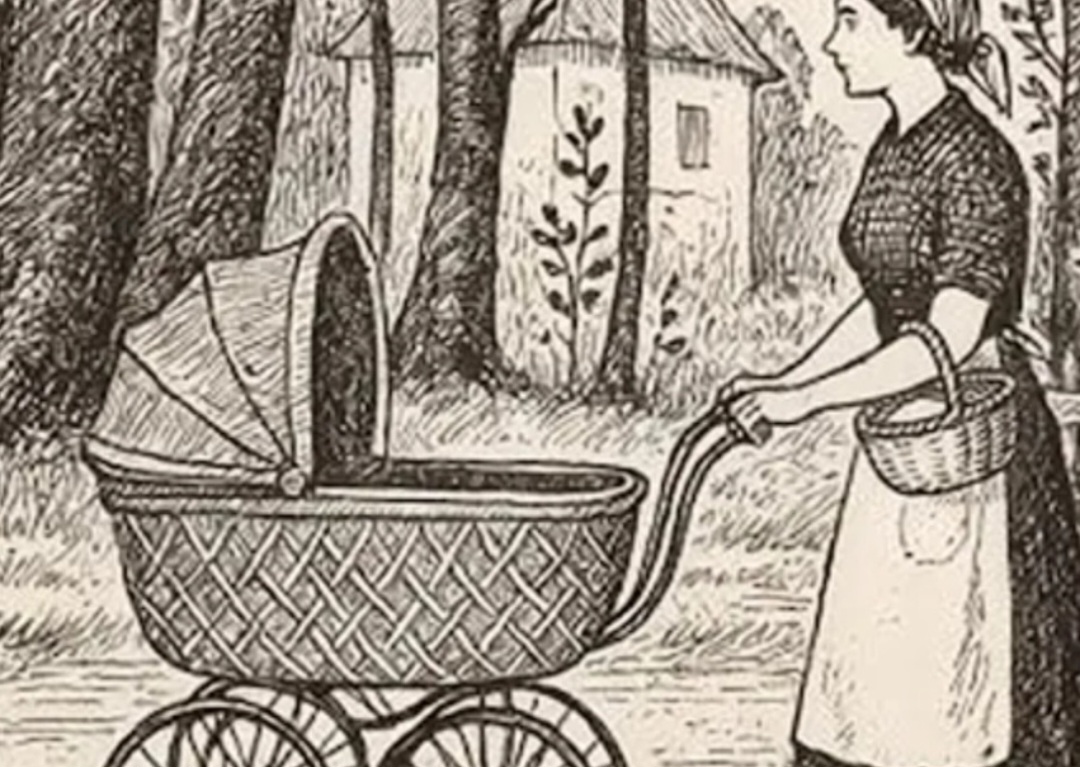
Somewhere inside this classic optical illusion, a hidden man is waiting to be discovered. And the funny thing is that once you finally see him, you may wonder how you ever missed him in the first place.That little moment of “Oh! THERE he is!” is exactly what makes optical illusions so fascinating.Your eyes aren’t simply taking a photograph of the world and sending it straight to your brain. Your brain is constantly sorting, filtering, predicting, and interpreting what you’re seeing. Sometimes it gets the answer right immediately.And sometimes?It confidently sees something that isn’t actually there.This hidden-man illusion is a wonderful example of just how much work your brain is doing behind the scenes.So before you scroll down looking for the answer, give yourself a few seconds.Can you find the hidden man?Don’t worry if you can’t see him right away. That’s part of the fun!!What Is the Hidden Man Optical Illusion?This type of puzzle is a classic hidden-image optical illusion, sometimes called a concealed-image illusion.Instead of presenting a person clearly against a plain background, the artist incorporates the man’s outline into a larger scene.His body may blend into tree branches, shadows, rocks, clothing, buildings, or other objects.The result is an image containing two different interpretations.At first glance, your brain settles on the obvious scene.But after you notice the hidden figure, your perception changes.Suddenly, the same lines that looked like branches might become an arm.A shadow might become part of a face.A patch of darkness might suddenly look like a body.Nothing on the page has changed.Your interpretation has.And that is the really clever part.Before You Look for the Answer, Try ThisIf you’re looking at the illusion right now, don’t immediately search for the hidden man.Give your brain a chance.Step 1: Look at the Entire PictureDon’t focus on one tiny area.Take in the whole image first.Your brain naturally tries to understand an image as a complete scene, so starting with the big picture can sometimes help you spot something unusual.Step 2: Slowly Scan the EdgesMove your eyes around the image.Look at the corners.Look along the boundaries between light and dark areas.Hidden figures are often disguised by using the same edges and shapes that your brain has already assigned to other objects.Step 3: Tilt Your Head or Step BackThis sounds silly.It isn’t!Changing your viewing distance or angle can sometimes make a concealed shape easier to recognize.When you’re too close, you may become trapped in the details.Stepping back allows your brain to process the overall pattern differently.Step 4: Look for a FaceHuman faces are incredibly important to our visual system.If the hidden man is difficult to find, try looking specifically for facial features.Two dark spots might suddenly become eyes.A line might become a nose.A curve might become a jaw.And then…click.You see him.Why Can’t You See Him Immediately?Here’s where this simple little puzzle becomes much more interesting.Your brain doesn’t treat every visual detail equally.Imagine looking at a crowded room.There might be hundreds of individual shapes, colors, shadows, edges, and objects.If your brain consciously processed every single detail with equal attention, you’d be overwhelmed.Instead, your visual system rapidly organizes information into meaningful patterns.It asks questions such as:What objects am I looking at?Where are their boundaries?What’s in front of what?What is important?What can I safely ignore?Does this shape resemble something I’ve seen before?That filtering is incredibly useful.But optical illusions exploit it.Your Brain Doesn’t Just See—It Interprets
This is probably the biggest lesson hidden inside the illusion.
We often talk about seeing as though it’s passive.
You open your eyes.
Light enters.
You see what’s there.
Simple, right?
Not quite.
Vision involves a complicated interaction between information arriving from your eyes and the brain’s expectations about what that information means.
Your brain is essentially trying to make the best possible interpretation of incomplete visual information.
That’s why the same picture can look completely different once you know what you’re supposed to see.
The Power of Figure-Ground Perception
One important concept behind hidden-image illusions is called figure-ground organization.
Your brain naturally separates a visual scene into:
Figure: the object you’re paying attention to.
Ground: everything behind or around it.
The tricky part?
An optical illusion can make the same shape work as both.
A dark area might initially look like part of a tree.
But once you recognize the hidden man’s body, that same area suddenly becomes part of the figure.
Your brain changes which information belongs to the foreground and which belongs to the background.
This is closely related to classic Gestalt principles of perception, which describe how humans naturally organize visual information into meaningful wholes.
Why the Hidden Man Suddenly “Pops” Into View
Have you ever stared at an illusion for what feels like forever…
…and then suddenly seen the answer?
It’s almost like your brain flips a switch.
One second:
Nothing.
The next:
THERE HE IS.
This sudden change happens because perception isn’t simply about detecting lines.
Your brain has to assign meaning to those lines.
Before you recognize the hidden figure, your brain may group the shapes into one interpretation.
Afterward, it has a new framework.
Now the same visual information supports another interpretation.
That’s why the discovery can feel so dramatic.
Once You See Him, You Can’t Unsee Him
This is one of the strangest things about hidden-image puzzles.
Once your brain has learned the hidden pattern, it becomes much easier to find it again.
You have essentially created a new interpretation of the image.
The visual information hasn’t changed.
Your knowledge has.
And this is a beautiful example of how top-down processing can influence perception.
Your previous experience and expectations can affect what you perceive.
Knowing what you’re looking for gives your brain a powerful advantage.
Is This a Test of Intelligence?
Not really.
And please don’t panic if everyone around you sees the hidden man before you do!!
Optical illusions aren’t reliable intelligence tests.
How quickly someone notices a hidden figure can be influenced by many factors, including attention, familiarity with visual puzzles, viewing conditions, expectations, and simply how the image is constructed.
Someone who spots the man immediately isn’t necessarily “smarter.”
Someone who takes longer isn’t necessarily less perceptive.
In fact, these puzzles demonstrate something much more interesting:
Human vision is flexible.
Why Some People Spot Hidden Images Faster
There isn’t one simple explanation for why one person sees a concealed figure quickly while another struggles.
But several factors can matter.
Attention
If you’re actively searching for a person, you’re more likely to notice shapes that resemble a human body.
If you think you’re simply looking at a landscape, your brain may organize the same shapes differently.
Experience
People who regularly solve visual puzzles may know to look for unusual outlines, reversed figures, negative space, and overlapping shapes.
They’ve learned the tricks.
Expectations
If someone tells you, “There’s a man hidden near the tree,” you’re already approaching the picture differently.
Your brain has been given a search strategy.
Viewing Distance
Some illusions become easier to recognize when viewed from farther away.
Others work better up close.
That’s because changing distance changes the visual information reaching your eyes and how the overall pattern is organized.
The Illusion Is Playing a Little Trick on Your Brain
The artist isn’t necessarily hiding the man by making him invisible.
Instead, the figure is hidden by ambiguity.
The lines belong to more than one possible interpretation.
That’s much cleverer.
Imagine drawing a line.
It could be:
- a branch,
- a man’s arm,
- a shadow,
- a crack,
- or part of a building.
The artist’s job is to arrange enough ambiguous elements that your brain chooses the wrong interpretation first.
Then, once you’ve discovered the alternative, the puzzle suddenly makes sense.
Why Humans Are So Good at Seeing Faces
There’s another fascinating feature of hidden-image puzzles: faces are incredibly attention-grabbing.
Humans are remarkably sensitive to facial patterns.
We’re constantly scanning other people’s faces for information about emotion, identity, attention, and intention.
That’s why you can sometimes find a face hidden in clouds, wood grain, wallpaper, or random textures.
This tendency is known as pareidolia.
What Is Pareidolia?
Pareidolia is the tendency to perceive a familiar meaningful pattern—especially a face or object—in an ambiguous or random visual stimulus.
It’s why a cloud can look like a rabbit.
It’s why a knot in a piece of wood can look like an eye.
And it’s why your brain might suddenly discover a face in a completely ordinary pattern.
In a carefully designed optical illusion, however, the hidden image isn’t random.
The artist has intentionally arranged the visual elements to encourage that interpretation.
The Difference Between an Optical Illusion and Pareidolia
These terms are related, but they aren’t identical.
An optical illusion is a visual experience in which perception differs from what might be expected from the physical stimulus.
A hidden-image puzzle deliberately creates ambiguity so that one interpretation may initially dominate another.
Pareidolia, on the other hand, describes our tendency to perceive meaningful objects or patterns—often faces—in ambiguous stimuli.
So if you see a face in your toast?
That’s pareidolia.
If an artist deliberately creates an image where a landscape contains a hidden human figure?
That’s a concealed-image illusion.
Your brain is doing something similar in both cases: finding meaning in visual information.
Why Optical Illusions Are So Addictive
Let’s be honest.
These puzzles are ridiculously hard to ignore.
Someone says:
“There’s a man hidden in this picture.”
And suddenly you have to find him.
You scan.
You squint.
You move your phone.
You tilt your head.
You stare at the same tree for thirty seconds.
Nothing.
Then someone points him out.
And you’re thinking:
How did I not see that?!
That’s the reward.
Your brain gets a little burst of satisfaction from solving the perceptual problem.
It’s the same reason riddles, puzzles, spot-the-difference games, and visual challenges can be so engaging.
There’s a mystery.
There’s uncertainty.
And then there’s the satisfying moment of resolution.
What This Illusion Reveals About Your Brain
So what does this little hidden-man puzzle actually tell us?
Quite a lot.
Your Brain Looks for Patterns
Your visual system is constantly organizing information into patterns and meaningful objects.
That’s generally a good thing.
Without it, everyday life would be incredibly difficult.
Your Expectations Matter
What you expect to see can influence how you interpret what you’re looking at.
Tell someone to search for a face and suddenly certain shapes become much more noticeable.
Attention Is Selective
You can’t consciously focus on everything in a complex scene at once.
Your brain prioritizes.
That’s efficient—but it also means important information can sometimes slip past your attention.
Perception Can Change Without the Image Changing
This may be the coolest part.
The picture remains exactly the same.
Your eyes haven’t suddenly received a new photograph.
Yet your experience changes dramatically.
That’s a powerful reminder that seeing isn’t the same thing as simply recording.
Why Your Brain Sometimes Misses the Obvious
There’s a famous phenomenon in psychology called inattentional blindness.
It refers to failing to notice a visible object or event because attention is directed elsewhere.
A classic example is the famous “invisible gorilla” experiment, in which participants concentrating on a particular task sometimes failed to notice an unexpected person in the scene.
The hidden-man illusion isn’t the same experiment, but it demonstrates a related idea:
What you pay attention to influences what you notice.
You can be looking directly at something without consciously recognizing it.
That’s one of the most humbling things about human perception.
Try the Illusion Again
Now that you’ve read all this, go back to the image.
Look again.
You may find that the hidden man is much easier to see.
That’s not because the image changed.
It’s because you changed the way you were looking at it.
And that tiny difference is the entire magic of the puzzle.
A Fun Challenge to Try With Friends
Want to make this even more fun?
Show the illusion to someone without telling them exactly where the man is.
Give them a time limit.
Try:
30 seconds.
Then ask:
“Did you find him?”
If they haven’t, give them a vague hint instead of pointing directly at him.
For example: