
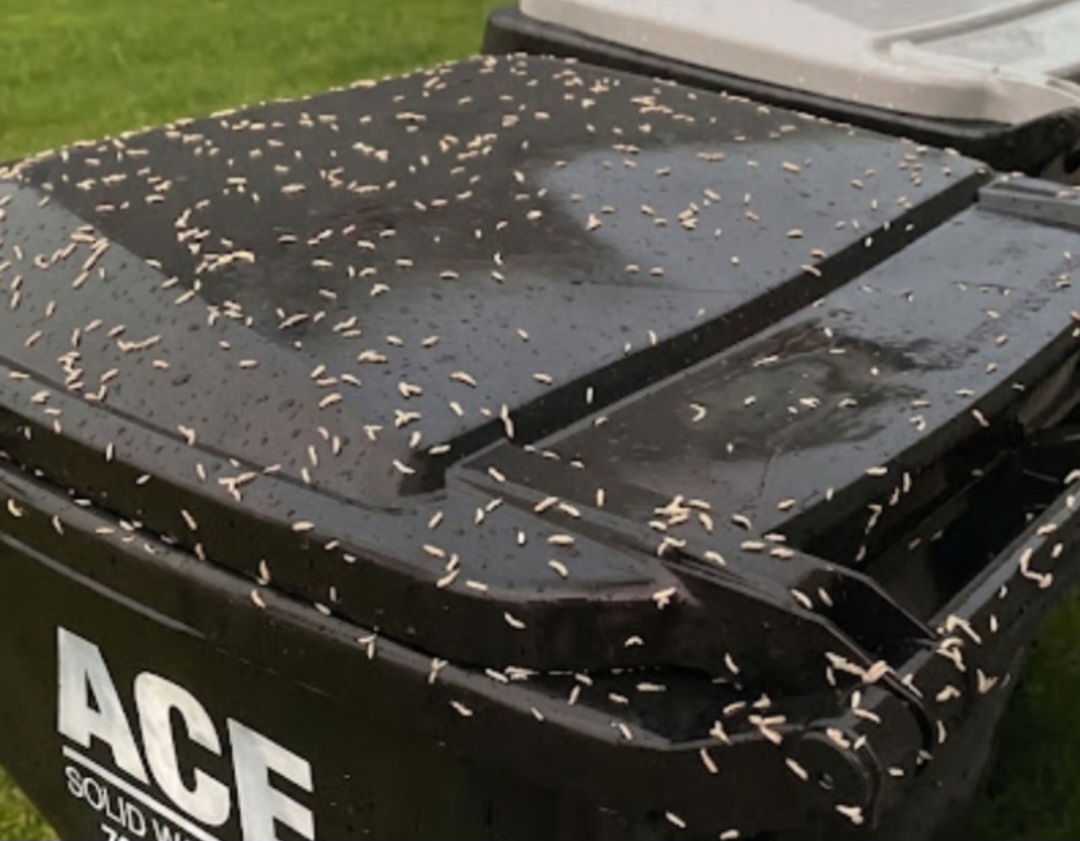
Opening the trash can and suddenly seeing dozens of tiny white creatures wriggling around can be a genuinely unpleasant surprise. They may look like little worms, but in a household garbage bin, there’s a very good chance you’re actually looking at maggots—the larval stage of flies.The good news is that this usually isn’t a mysterious infestation. It’s a sign that flies have found food or other organic material in the garbage and had an opportunity to lay eggs.Here’s what’s happening, how to get rid of them, and how to make your trash can much less attractive to flies.What Are Those Tiny White Worms?Maggots are immature flies.Adult flies are attracted to food scraps, meat, spoiled produce, pet waste, and other decomposing organic material. When they find a suitable spot, they can lay eggs directly on or near the waste.Those eggs can hatch surprisingly quickly in warm conditions, which is why it may seem as though the little white larvae appeared out of nowhere.Maggots are generally:White, cream-colored, or paleSoft-bodiedLeglessSmall and worm-likeOften found wriggling through moist organic wasteSo if they’re crawling around inside a garbage bag containing old food, maggots are the most likely explanation.Why Did They Suddenly Appear?It can happen remarkably fast.
You might take the garbage out one evening, put a fresh bag in the bin, and think everything is fine. The next time you open the lid, you discover tiny larvae crawling around.
The important thing to understand is that they didn’t simply materialize overnight.
Flies may have already laid eggs on food residue or exposed garbage. Under warm conditions, those eggs can hatch rapidly.
That’s also why these problems tend to be more noticeable during hot weather.
Warmth + Moisture + Food = Trouble
A garbage can can provide almost everything flies need:
- Food scraps
- Moisture
- Warmth
- Protection
- Decomposing organic matter
As food breaks down, it also produces odors that can attract more flies.
What Attracts Maggots to a Trash Can?
You don’t necessarily need a large amount of rotten food.
Even small amounts of organic residue can attract flies.
Common sources include:
- Meat scraps
- Fish and seafood
- Fruit peels
- Vegetables
- Leftover cooked food
- Pet food
- Greasy food waste
- Animal waste
- Dirty food packaging
Sometimes the problem isn’t even the garbage bag itself.
Liquid from food waste can leak through the bag and collect at the bottom of the bin. Food residue can also stick to the sides, lid, rim, or corners.
That’s why simply replacing the garbage bag may not completely solve the problem.
What Should You Do If You Find Maggots?
First, don’t panic.
They’re disgusting to look at, but finding maggots in household garbage is usually a sanitation issue rather than a mysterious or dangerous infestation. One local authority notes that there is no evidence that maggots themselves cause health problems, although flies and contaminated waste should still be handled hygienically.
Step 1: Remove the Infested Garbage
Tie the garbage bag securely.
If possible, take it outside rather than carrying an open or leaking bag through your home.
If the bag is damaged, place it inside another sturdy bag before moving it.
Step 2: Keep Children and Pets Away
While you’re dealing with the garbage, keep children and pets away from the area.
Wear gloves if you’re handling contaminated waste or cleaning the bin.
Step 3: Clean the Trash Can
Once the garbage has been removed, inspect the entire bin.
Check:
- The bottom
- Inside walls
- Lid
- Rim
- Handles
- Corners
- Any cracks or seams
Remove visible residue and wash the container thoroughly with an appropriate household disinfecting cleaner, following the product’s directions. Public-health and local-authority guidance also recommends cleaning bins after they’re emptied.
Never mix bleach with ammonia, acids, or other cleaning products.
Step 4: Let It Dry
Don’t immediately put a new bag into a wet garbage can.
Allow the container to dry completely.
Reducing moisture makes the environment less appealing to flies and helps keep odors under control.
How to Keep Maggots From Coming Back
Getting rid of the current larvae is only half the job.
The real goal is to prevent flies from reaching the garbage in the first place.
Keep the Lid Closed
A tightly closed lid is one of the simplest ways to prevent flies from accessing food waste.
Tie Garbage Bags Securely
Don’t leave food waste sitting in an open bag.
Tie bags tightly, especially when they contain meat, fish, pet waste, or other strongly scented materials.
Take Food Waste Out Regularly
The longer decomposing food remains available, the more opportunity flies have to find it.
If your garbage contains significant amounts of food waste, don’t wait until the bag is completely full before removing it.
Keep the Bin Out of Direct Sunlight
If possible, place outdoor garbage cans in a shaded location.
Lower temperatures can help slow decomposition and reduce the odors that attract flies.
Clean the Bin Regularly
Even when the garbage bag doesn’t leak, residue can build up inside the container over time.
A regular cleaning routine can make a significant difference.
What If the Maggots Are Outside the Garbage Bag?
This is fairly common.
If food liquid has leaked from the bag, flies may have access to residue at the bottom or sides of the container.
That’s why you shouldn’t stop after throwing away the infested bag.
Clean the actual trash can.
Otherwise, leftover organic material can continue attracting flies and provide another place for eggs to be laid.
What If You Keep Seeing Them?
If you clean the garbage can but continue finding maggots or seeing large numbers of flies, look for another source.
Check places such as:
- Recycling containers
- Compost bins
- Pet food
- Pet waste
- Forgotten food
- Fruit sitting on the counter
- Outdoor garbage
- Damp organic material
- Areas underneath appliances
Flies don’t necessarily need your main kitchen trash can to reproduce.
If there’s an unexplained, persistent fly problem inside the home, finding the breeding source is more useful than repeatedly killing individual flies.
A Simple Way to Prevent the Problem
Think of it as a three-step cycle:
Keep flies away → seal food waste → clean the container.
The less access flies have to decomposing food, the less opportunity they have to lay eggs.
For especially warm weather, some households also freeze particularly smelly food scraps until garbage collection day. Freezing can reduce odors and prevent flies from accessing the waste before disposal.
Frequently Asked Questions
Are the tiny white worms in garbage always maggots?
Not necessarily. Other insect larvae can look worm-like. However, maggots are the most likely explanation when pale, legless larvae are found in food waste or a dirty garbage bin.
Where do maggots come from?
They hatch from fly eggs. Adult flies are attracted to suitable organic material and may lay eggs directly on or near it.
How quickly can maggots appear?
In warm conditions, fly eggs can hatch rapidly—sometimes within about a day.
Why are there more maggots in summer?
Warm temperatures speed up decomposition and can accelerate the development of fly eggs and larvae, making garbage a particularly favorable environment.
Will taking out the garbage get rid of them?
It removes the main food source, but you should also clean the inside of the garbage can. Residue left behind can continue attracting flies.
Can I prevent maggots completely?
You can’t guarantee that you’ll never see one, but keeping garbage covered, tying food waste securely, cleaning the bin regularly, and minimizing exposure to flies can greatly reduce the chance of an infestation.
The Bottom Line
Those creepy little white “worms” in your trash probably aren’t worms at all.
They’re most likely maggots—the larvae of flies.
They appear when flies find suitable organic waste, lay eggs, and those eggs hatch into larvae. Warm weather, moisture, food residue, and uncovered garbage can make the process happen surprisingly quickly.
The solution is straightforward:
Remove the infested waste, clean the trash can thoroughly, let it dry, and keep future food waste tightly sealed.
And if you suddenly discover a whole colony crawling around your garbage, remember: as unpleasant as it looks, you’ve most likely just caught a very ordinary part of the fly life cycle happening in an unfortunate location.